Alternative respiration in animals
Why do some animals retain alternative oxidase, and does it help them cope with low oxygen and other respiratory stresses?
Ecology · Physiology · Evolution
We study how life powers itself under environmental stress, and how that shapes where organisms live.
Our work connects mitochondrial physiology to evolutionary biology using hypothesis-driven experiments and bioinformatic approaches. We currently work with soil animals, fungal pathogens, and pollinators to understand how respiratory stress toleracnce evolves and its impacts on ecology, evolution, and disease.
Our research
From the lab
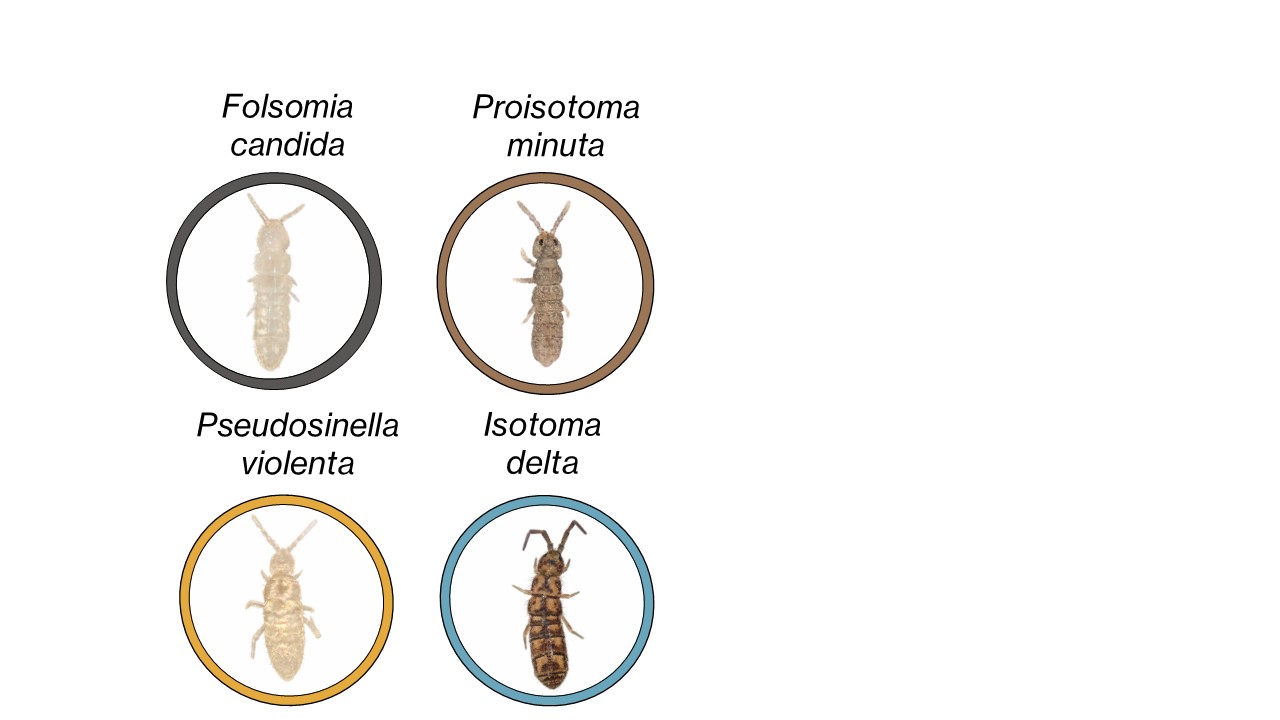
Our soil animial research examines how a horizontally acquired respiratory enzyme became part of animal physiology, and what it means for life in low-oxygen environments.
Read the springtail preprintWhy do some animals retain alternative oxidase, and does it help them cope with low oxygen and other respiratory stresses?
How does alternative oxidase affect stress tolerance and infection in fungi that cause disease in plants, wildlife, and humans?
How does mitochondrial function relate to bee foraging, division of labor, and responses to heat and cold?
How do mitochondrial and nuclear genomes evolve together to maintain a working respiratory system?
Led by Dr. Ryan Weaver, our group includes graduate students in Microbiology and Genetics and Genomics. Meet the people behind the projects, or get in touch about undergraduate research and collaboration.